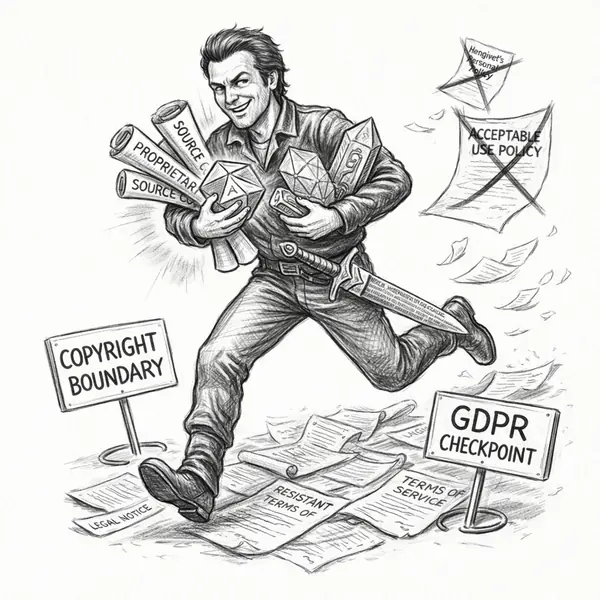
Outlaw of AI Plunder
Nobody's going to check
The Outlaw sees the rules as friction. They feed proprietary code into public models without checking terms of service, generate code from copyleft-trained AI and ship it in proprietary products, and bypass approved tool lists because the approved tools are inferior. The legal and compliance consequences move slowly, which the Outlaw interprets as evidence they don't exist.
Symptom
Uses unsanctioned tools casually. Pipes source code into AI without checking data handling. Copies AI-generated code without provenance. Waves away licensing concerns with confident legal opinions they're not qualified to give.
Why It Matters
The Outlaw's costs are latent and catastrophic. Licensing violations surface during due diligence for funding rounds or acquisitions. A single instance of copyleft-tainted code can require expensive remediation. These costs are rare, which the Outlaw uses as evidence they're hypothetical. They are not hypothetical.
What the Chapter Gives You
How to treat AI tool governance like dependency management, why provenance tracking should be standard practice, and the technical controls that make the sanctioned path the easy path.
Want the full chapter? Grab the free cheat sheet, read an excerpt, or get the book.
Recognize this one in your codebase?
Free cheat sheet, excerpts, and interactive diagnostics.