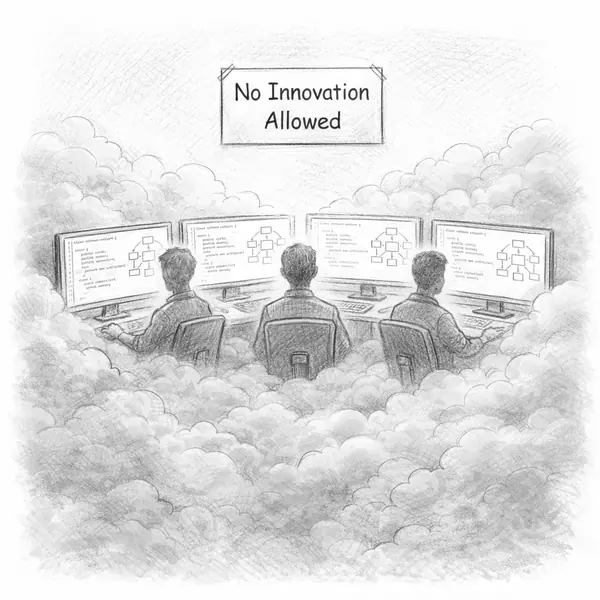
The Stagnant Miasma
If it ain't broke, don't even look at it
The Stagnant Miasma doesn't attack. It settles. A faint, comforting haze that smells like familiarity — the patterns you already know, the tools you've already mastered. It whispers that what worked last time will work this time. AI tools reinforce those existing patterns, and the team's confidence in the old way grows while new ideas feel riskier.
Symptom
The architecture hasn't changed in three years and nobody's asked whether it should. The AI generates code that matches existing patterns 100% of the time. 'We've always done it this way' is the strongest argument in the room.
Why It Matters
The Miasma is stagnation dressed as stability. AI models are backward-looking by nature — trained on historical data, reflecting past conventions. When a team uses AI exclusively to replicate what they've already done, the model validates their approach, confidence increases, and innovation slows. Then it stops.
What the Chapter Gives You
How to audit your context files for restrictive instructions, the team rituals that ventilate the fog, and why asking the AI to critique your architecture is different from asking it to extend it.
Want the full chapter? Grab the free cheat sheet, read an excerpt, or get the book.
Recognize this one in your codebase?
Free cheat sheet, excerpts, and interactive diagnostics.