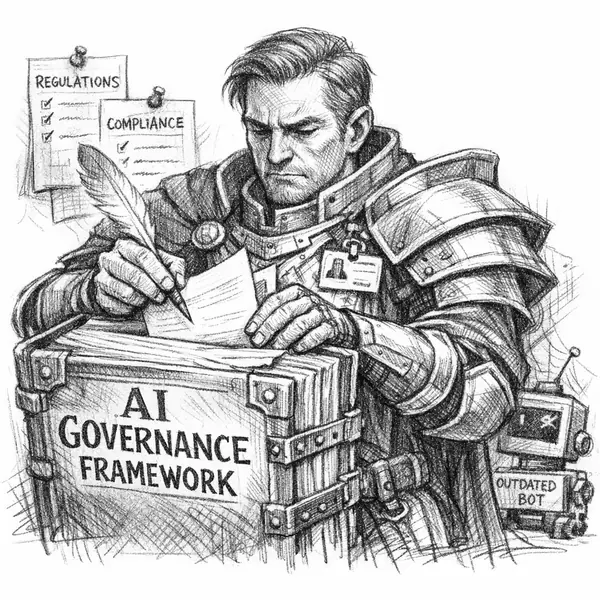
The Policy Paladin
More process will save us — eventually
The Policy Paladin believes, not wrongly, that rules matter. This character's strength is institutional memory and procedural seriousness. They have seen what happens when organizations adopt technology without governance. They have the incident reports, the audit findings, the awkward remediation plans, and the meeting where everyone agreed the policy would be updated immediately after the thing that was not supposed to happen happened.
Symptom
Every risk triggers a new policy review, security assessment, or legal evaluation. The Paladin adds process without clarifying who has the authority to stop things after the process completes.
Why It Matters
The Policy Paladin's instinct for process is not wrong — but process without authority is ceremony. The workflow moves through the new process steps, takes time during which it continues operating, and arrives at the end with the same ambiguity about whether it was ever actually evaluated or just processed.
What the Chapter Gives You
Why process without authority is theater, how to distinguish governance from ceremony, and the question that reveals whether the Paladin is protecting the organization or just documenting its risks.
Want the full chapter? Grab the free cheat sheet, read an excerpt, or get the book.
Recognize this one in your codebase?
Free cheat sheet, excerpts, and interactive diagnostics.