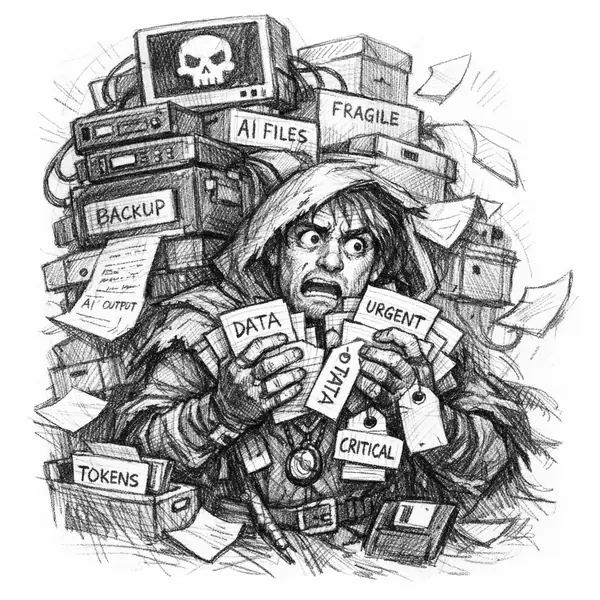
Doomsday Archivist
Always ready for the last catastrophe
The Doomsday Archivist doesn't ship features. They ship preparedness. Every AI-generated output is logged, labeled, versioned, and stored in a system designed to survive the apocalypse. The apocalypse never comes, but the documentation does — and it's growing faster than the code it documents.
Symptom
Five backups, none tested this decade. A disaster recovery binder that survives all disasters except relevance. Every AI interaction logged in a system so comprehensive that querying it requires its own documentation. The Archivist's work is impeccable and completely disconnected from what the team actually needs.
Why It Matters
The Archivist's preparation is real — but it's also a form of productive procrastination. Logging everything feels like work. Cataloging risks feels like risk management. But the disaster binder is useless if nobody reads it, and the five backups are useless if nobody tests them.
What the Chapter Gives You
How to distinguish genuine preparedness from preparedness theater, why comprehensive logging of AI outputs is not the same as governance, and the counter-moves that connect the Archivist's work to actual risk.
Want the full chapter? Grab the free cheat sheet, read an excerpt, or get the book.
Recognize this one in your codebase?
Free cheat sheet, excerpts, and interactive diagnostics.