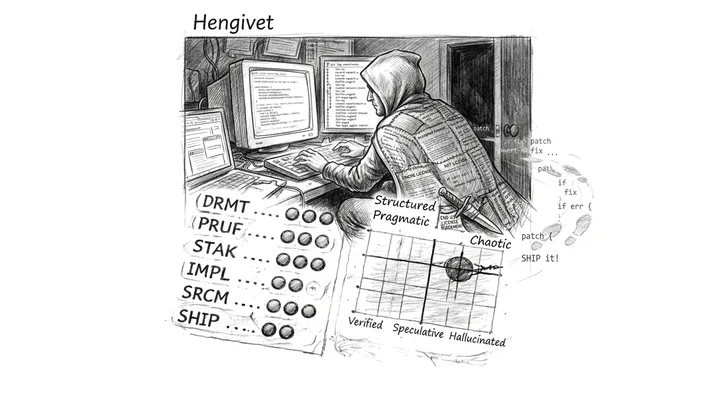
If you manage engineers, you already know this person. They're the one you quietly pull into a room and say, "Listen, this is critical. I need this done. I trust you to handle it." No committee. No drawn-out alignment cycle. Just execution.
That's the Rogue. Not a thief — a problem-solver operating just outside the lines. Someone who bends constraints, recombines tools, and finds a path that wasn't supposed to exist. Cleverness with intent. Improvisation with results.
AI tools fit the Rogue almost perfectly. A technology that generates plausible code in seconds, remixes existing solutions into something that looks original, and moves fast enough to match the Rogue's natural pace. The same speed that produces impressive output also produces output that nobody reviewed. The same cleverness that finds novel solutions also finds novel ways to violate terms of service.
The Rogue's three anti-patterns are what happens when effectiveness outruns accountability.
The Shadow Patcher of Ephemeral Solutions uses AI the way a field medic uses duct tape: to hold things together long enough to get through the immediate crisis, with full intention of doing it properly later. Later never comes. The AI generates a fix, the Shadow Patcher applies it, the CI pipeline goes green, and they're on to the next ticket. Behind them, the codebase fills up with quick patches that work individually but form a collective maze of brittle dependencies and undocumented workarounds.
Each fix addresses the immediate problem and passes its tests. The damage is structural. The patches don't cohere into a legible system because they weren't designed to work together. Each one was generated in isolation, applied in haste, and forgotten the moment the ticket moved to Done.
The Bandit of Borrowed Brilliance uses AI-mediated synthesis to project understanding that doesn't run nearly as deep as it looks. They can discuss architectural patterns, cite relevant papers, and reference specific implementation details — all generated by a model and absorbed fast enough to sound authoritative in the next meeting. The Bandit isn't lying. They're performing competence that hasn't been earned through experience, and the performance is convincing because the AI's output is fluent.
The Outlaw of AI Plunder treats licenses, terms, and governance as optional friction until the legal consequences finally arrive. They paste code from AI tools without checking whether the generated output reproduces copyrighted material. They integrate APIs without reading the terms of service. They use models in ways that violate usage policies because the policies are long and the deadline is short. None of this feels like stealing in the moment. It feels like efficiency.
The Rogue is not necessarily malicious and not always reckless. They are often effective in ways that don't look clean from the outside. Their speed tends to come from decisions the rest of the team only discovers later. By the time you realize what happened, the shortcut was taken, the code was borrowed, the undocumented API was integrated, and the Rogue has already moved on to the next thing.
The counter-move isn't to slow the Rogue down. It's to make the practices around them strong enough to keep a genuine strength from becoming a liability. Code review that catches provenance, not just syntax. Approval gates that match blast radius. Documentation requirements that force the why to be recorded, not just the what.
Rogues don't produce slop because they're careless. They produce slop because they're fast, they're confident, and AI makes them faster and more confident. The question is whether your practices are strong enough to keep momentum from becoming a crater.