The AI Coding Gap Is Experience

The Ai Coding Gap Isnt Skill Its Scar Tissue

AI coding tools have created a new divide, but it is not the one people usually describe. It is not senior developers versus junior developers. It is not people who know how to prompt versus people who do not.

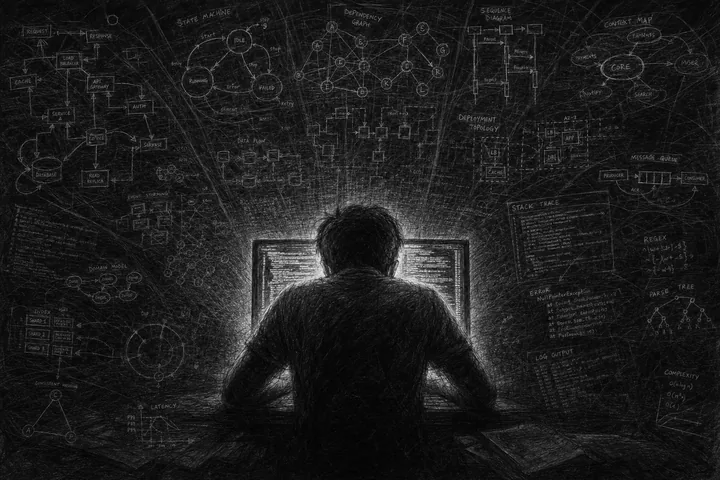
The gap is between people who have learned what broken software looks like in production and people who have mostly seen code in a clean editor.

That experience changes how you read an AI suggestion. A function can be elegant and still be wrong. A test can pass and still test nothing important. A refactor can make a file shorter while quietly changing the behavior three layers below it. You learn these things by being surprised at inconvenient times.

AI is very good at looking finished

The assistant gives everyone access to polished output. That is useful. It also removes some of the visual clues that used to warn people away.

Handwritten code often arrives with rough edges. The naming is inconsistent. The abstraction is a little awkward. The author leaves a comment explaining a strange choice because they remember making it. Generated code tends to arrive cleaner. It has the shape of a solution before anyone has checked whether it solves the right problem.

Someone who has spent years on call does not necessarily reject that code. They ask different questions. What happens when this value is missing? What happens after the third retry? Which data crosses the boundary? What does this do to the queue at 2 a.m.? They have seen the happy path. They are looking for the part that wakes them up.

Experience is a scar tissue problem

Production experience is hard to summarize because much of it is negative knowledge. You remember the incident that taught you not to trust a timeout default. You remember the migration that worked in staging and failed when the real data arrived. You remember approving a small change that turned into a weekend.

Those memories become a filter. They slow down the moment when slowing down is useful.

AI makes that filter more important, not less. The tool can produce ten plausible implementations before a less experienced developer has finished deciding what the requirement means. Speed at that stage does not solve uncertainty. It hides it under code.

This is why the best AI-assisted developers are not always the fastest typists. They are often the people who can recognize a familiar failure early enough to stop it. They know when to accept a suggestion, when to ask for a smaller one, and when to close the assistant and think.

What teams should do about it

Do not treat experience as a private advantage that senior developers carry around in their heads. Make it visible.

Pair newer developers with people who have operated the systems they are changing. Review AI-generated code for assumptions, not just style. Ask the author to explain the choice in their own words. Keep incident writeups close to the code and use them in review training. Let people present the modules they inherited, especially the ones nobody wants to touch.

And do not measure the tool only by how quickly it produces code. Measure what happens afterward. How many suggestions survive review? How often do generated tests catch a real regression? How much rework appears two weeks later? A fast first draft is not a productivity win if someone else spends Friday night discovering what it assumed.

The coding gap is not a contest between people who use AI and people who do not. It is the difference between producing code and understanding the consequences of shipping it. AI can help with the first part. The second still has to be learned the old way: by paying attention, asking uncomfortable questions, and remembering what broke last time.

>